China
China English

Tsinghua News Network, April 29. Advanced chips are the bottom-level technological cornerstone of the current information society and artificial intelligence era. Mastering the materials, processes, devices, design, and manufacturing of new-generation chips is one of the main battlefields for technological strategic innovation for a long time. one. Since the classic geometric scaling of Moore's Law at the 90nm node in 2003 and the equivalent Moore's Law at the 7nm node in 2020 have both failed, the scaling speed of silicon-based transistors has been greatly reduced. At the 10nm scale, the quantum effects of traditional semiconductor materials began to appear, and continued scaling encountered great challenges in materials, processes, device structures, manufacturing yields and costs. Therefore, in the post-Moore era, how to promote the development of next-generation high-performance chips through basic research, especially the innovation of new chip materials and new devices, is one of the most challenging research directions.
Layered semiconductor materials, represented by transition metal dichalcogenides, are considered to be one of the most potential new chip materials. Lateral junctions composed of a variety of layered semiconductor materials, such as homojunction, heterojunction, Hybrid multi-level junctions and superlattice junctions, etc., have a variety of tunable electrical and optical properties, providing a new degree of research freedom for the development of next-generation high-performance electronic devices, and also for the development of new principles and structures based on and beyond traditional The new generation of chips of semiconductor materials provides a new research strategy.
Recently, combined with the team's multiple research results in this field, Assistant Professor Wang Chen, Professor Li Zhengcao, and Professor Xiong Qihua from the Department of Physics, etc., systematically proposed the overall research framework of the lateral layered semiconductor junction (Figure 1), and sorted out on this basis. In recent years, the fine and controllable synthesis of lateral junctions, electronic structure modulation and optical performance regulation, prototype devices and applications of new-structure high-performance logic devices and optoelectronic devices, and the unique performance advantages and optimal lateral junction devices that have plagued the industry for many years. The debate points such as the junction width standard of junction devices are systematically sorted out, and a systematic analysis and prospect for the development of lateral junctions of new materials for such chips in the future are given (Figure 2).
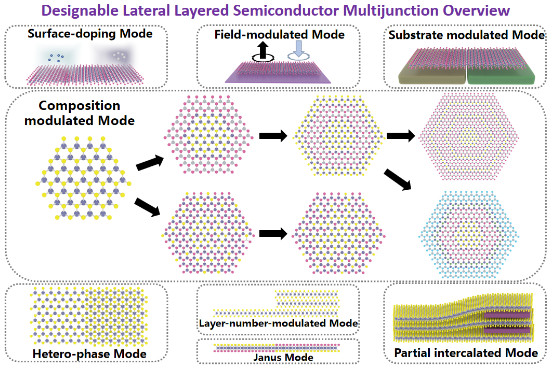
Figure 1. The overall research framework of the lateral layered semiconductor junction
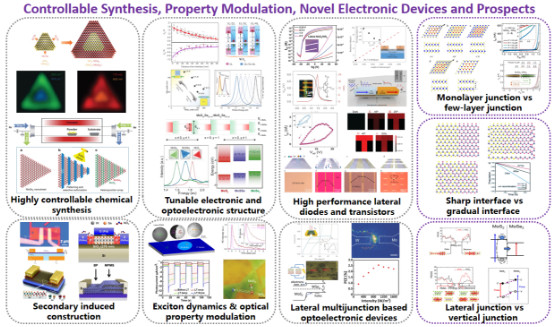
Figure 2 The core research context and broad development prospects of the layered semiconductor lateral junction
This work revolves around the controllable synthesis, multi-dimensional performance regulation and high-performance device fabrication of lateral layered semiconductor junctions, with the title of "Lateral layered semiconductor multijunction for novel electronic devices", It was published online on April 28 in Chemical Society Reviews, a high-impact international journal in the field of materials.
Zhang Simian and Deng Xiaonan, the 2021 doctoral students of the School of Materials Science and Engineering, are the co-first authors of the paper, Assistant Professor Wang Chen, Professor Li Zhengcao, and Professor Xiong Qihua of the Department of Physics are the co-corresponding authors of this paper, and Associate Professor Lu Ruitao and Associate Professor Liu Kai of the School of Materials Science Strong support has been given, and related research work has been supported by the National Key R&D Program, the National Natural Science Foundation of China and the Tsinghua-Foshan Innovation Special Fund.
The research group of Assistant Professor Wang Chen from the School of Materials is committed to developing new semiconductor materials, chip interconnect materials, next-generation semiconductor processes, new-principle high-performance devices, and multi-source heterogeneous integrated microchips from two aspects of new chip materials and post-Moore integrated chips. Systematic basic research and convergent application research of systems and new-generation chips. The research group of Professor Li Zhengcao of the School of Materials Science and Engineering has long been devoted to the research of material design and radiation effects, nuclear energy materials and system safety. The research group of Professor Qihua Xiong of the Department of Physics has long been devoted to the research of condensed matter spectroscopy, ultrafast spectroscopy, microcavity enhanced light-matter interaction, photonics and optoelectronic devices.